Home › Services
Wood fences in Detroit, chosen and built for clay and hard winters
Wood is still the fence most Metro Detroit homeowners picture first: a tall board fence around a back yard, a short picket line along a bungalow front walk, a split rail at the edge of a bigger suburban lot. It is warm to look at and fixable one board at a time, but it lives a hard life here. Wet clay holds moisture against every post, frost lifts the ground each winter, and spring arrives soaked. This page covers the choices that decide how long a wood fence lasts in southeast Michigan -- species, ground-contact lumber, style, post size, hardware and finish -- so the proposal you get reads clearly. A quick request with the location and some yard shots gets the process moving.
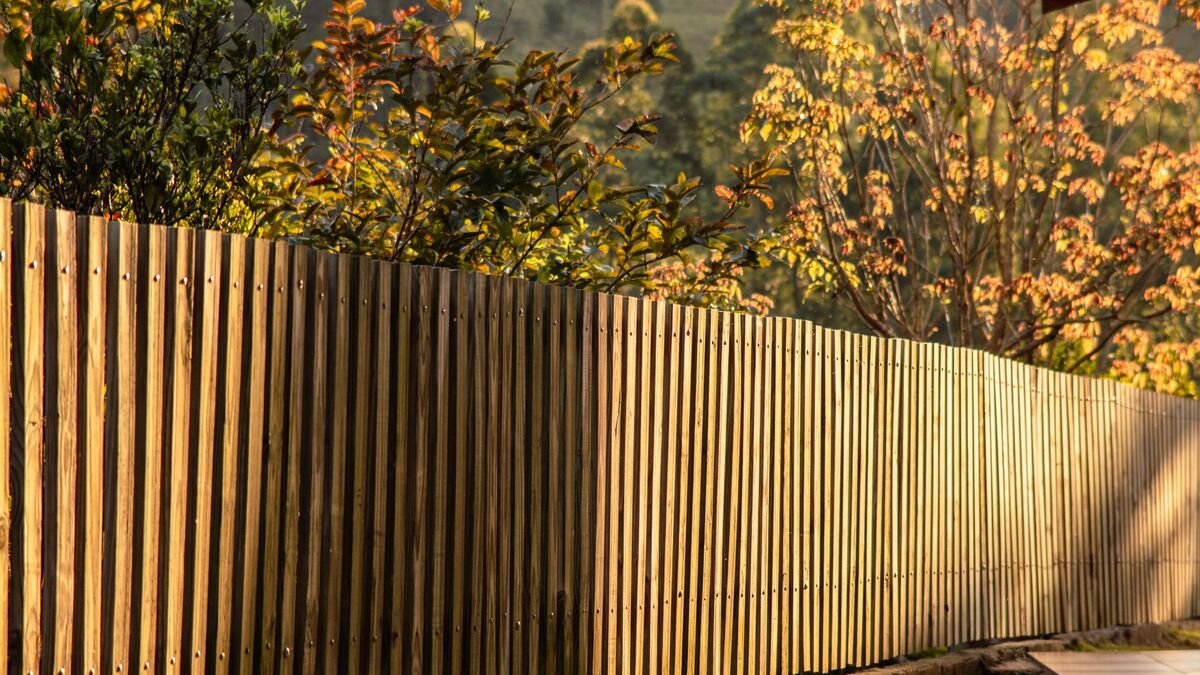
Treated pine versus cedar, and why it is settled first
Nearly every wood fence in the region is built from one of two families. Pressure-treated southern yellow pine is the workhorse. The lumber is forced full of a copper-based preservative in a pressure cylinder, which is what gives fresh boards that green or brown tint. Pine is strong, stiff and widely stocked. Its weak points are movement and checking: it loses moisture and narrows over time, and it can twist or cup, and the treatment only goes so deep, so fresh cuts expose untreated wood.
Western red cedar is the other common pick. Oils in its heartwood fend off rot and bugs on their own, it holds flatter, and it takes stain beautifully, though it is softer and dents easily. The usual recipe across Metro Detroit is a hybrid: treated posts in the ground, where rot pressure is highest, and cedar rails and boards above, where looks matter most. Cedar posts set in wet clay are a gamble that rarely pays off here.
Why the ground-contact rating on treated lumber matters
Treated lumber comes in several retention levels, and the small end tag on every board names the level that piece carries. Pickets are often rated only for above-ground use. Anything that goes into soil or concrete needs lumber rated for ground contact, and the two can look identical on the rack.
- Check the end tag on every post before it goes in the hole; it names the preservative and the intended use.
- Ask the contractor to say in writing which post grade the proposal includes, not only the board species.
- Expect the field-cut tops and any trimmed post bottoms to get a brushed-on preservative, since cutting opens untreated core wood.
Privacy fence styles: stockade, board-on-board, shadowbox and horizontal
Most wood fences in the region are built for privacy, and the style changes how much they block, how they handle wind, and how they shrink. Here is how the common options compare in practice.
- Stockade: boards set tight against one another, frequently finished with pointed or dog-ear tops. It is the most economical solid style, but as pine dries, thin gaps open between boards, so it is never fully blind.
- Board-on-board: boards are hung with gaps on one pass, and a second pass on the same face lays more boards over each gap. It stays private after shrinkage and looks finished, at the cost of more lumber and labor.
- Shadowbox: boards alternate on opposite sides of the rails, so the fence looks the same from both yards and air passes through the offset gaps. Neighbors tend to like it, and it carries less wind load than a solid wall.
- Horizontal: boards run sideways for a modern look, which needs closer post spacing or a center stiffener so long boards do not sag.
- Cap and trim: a flat cap board and trim strip along the top that shed water off the board ends, where rot starts first.
Picket fences and split rail for front yards and larger lots
A short picket fence along a front walk is a natural fit for the brick bungalows and colonials found throughout Detroit and the older inner-ring suburbs, and it reads as a boundary rather than a barrier. Pickets can be flat-topped, dog-eared, pointed or scalloped between posts, and spacing between them is a design choice that changes how open the fence feels. Front-yard fencing is also where height and sight-line rules tend to bite hardest, so the city, village or township code for the address, plus any association rules, should be checked before anything is ordered.
Split rail is the other open style. Rough-split rails slide into mortised posts with no nails, and it suits larger Oakland County lots where it marks a line without closing in a view. Welded wire on the inside face turns it into a dog fence.
How big the posts are and how far apart they stand
A solid privacy fence is a sail, and the posts do all the work of holding it up. The common post is a nominal four-by-four, which handles shorter and open fences well. Taller solid fences, gate posts and any post at the end of a run are often upgraded to four-by-six or six-by-six stock, because a thicker post resists bending and twisting far better, and twisting is one of the ways wood posts fail as they dry.
Wind is the reason. Flat ground and long rows of open back yards let gusts cross Metro Detroit with little to slow them, and a solid board fence catches that force across its whole face, turning each post into a lever pivoting at soft spring clay. Fence sections are commonly built around an eight-foot rail length, but a contractor may tighten that on a solid or horizontal design or an exposed corner, and add a middle rail on a tall fence so boards do not bow. Shorter bays mean more posts and more cost, but less sag and less leverage on each post. The depth each hole needs, and the way posts are set, is covered on the fence installation page; the short version is that the bottom of the post has to sit below the frost line the local building department recognizes.
Fasteners, hardware and the corrosion problem
The copper in modern treated lumber attacks plain and lightly coated steel. A fence nailed together with the wrong fasteners can look fine for a few seasons and then start dropping boards as nail heads rust away, leaving black streaks down every picket on the way. Cedar has its own issue: its natural tannins react with uncoated steel and leave dark stains.
- Hot-dip galvanized nails and screws are the baseline for treated lumber; electroplated fasteners are thinner coated and do not last as long.
- Stainless steel fasteners cost more but avoid both rust and tannin staining, and they are often worth it on cedar boards that will be stained.
- Ring-shank nails grip better than smooth ones, and screws let a board come out later without splitting its neighbors.
- Rail brackets, gate hinges and latches should be rated for exterior use with treated wood, and gate hardware should be sized for the gate's weight and width.
How wood fences fail in a southeast Michigan climate
Wood rarely fails all at once. It fails at the places where water sits. The most common spot is the post at the ground line, where soil, air and moisture meet; this is where decay fungi do their best work, and a post can be sound a few inches above grade and hollow right at it. Next come board bottoms touching soil and the rail joints that trap water.
Frost adds a mechanical problem. Saturated clay expands as it freezes and can grip a post and lift it, a little each winter, until a section is visibly out of line. Repairs for each of these are covered on the fence repair page. The rest of this page is about choices that push those failures further away.
Design details that slow rot and buy years
These details cost little at build time and are hard to add later.
- Keep the bottoms of boards an inch or two above the soil so they dry between rains instead of wicking water.
- Use a treated rot board, sometimes called a kickboard, along the bottom; it takes ground contact so the pickets do not, and it can be replaced on its own.
- Crown the concrete or backfill around each post so water runs away from the wood rather than pooling against it.
- Pull mulch, soil and landscape beds back from the fence line; piling them against boards is one of the fastest ways to rot a fence.
- Top each post with a cap or an angled cut so water does not soak into its end grain.
Staining and sealing: a realistic maintenance cycle
Bare wood turns silver-gray within a season or two. The fence will still stand, but unfinished boards absorb more water, crack more and mildew faster in shade. A penetrating stain slows that, on a cycle like this one.
- Let new treated pine dry before finishing it. Try a few drops of water on the surface: beading means it needs more time, and quick absorption means it can take a finish. Cedar is generally ready earlier.
- Clean the surface with a wood cleaner; a pressure washer on a high setting tears up the grain, especially on cedar.
- Apply a penetrating oil-based or water-based exterior stain. Semi-transparent stains show the grain and are easy to refresh; solid stains hide more and last longer but eventually peel like paint.
- Coat both faces, the top edges and board ends, then refresh the sunny side every few years and the shaded side when it looks dry.
What drives the cost of a wood fence, and whether wood is right for you
The contractor prices a wood fence after seeing the line. For wood specifically, the figure moves with species and grade, the style (stockade uses the least lumber, board-on-board and shadowbox noticeably more), height and post size, the number and width of gates, extras like cap and trim or stainless fasteners, whether staining is included, and site conditions such as tight alley access, old fence removal and tree roots.
Wood makes the most sense when you want a natural look, a fence that can follow an irregular line, and the option to repair a single board rather than a whole panel. It asks for some upkeep in return. If you would rather skip staining entirely, read the vinyl fence page. For a dog run or a back lot line where looks matter less, chain link is worth a look. If your home is in one of the older neighborhoods with narrow lots and alleys, the Royal Oak and Dearborn pages describe the conditions found there, and the full list is on the service areas page.
Getting a wood fence priced begins on the contact page. Share where the house is, about how far the fence runs, the board style you are leaning toward and some pictures of the yard. A fence contractor working the region will review it and follow up to set a time to see the property.
Wood fences in Detroit — common questions
How long does a wood fence last in Michigan?
It depends far more on the details than on the calendar. A treated pine or cedar fence with ground-contact posts, boards kept off the soil, good fasteners and a refreshed stain can stand for many years. One built with above-ground lumber in the holes, nails that rust, and mulch piled against the boards can start leaning and rotting surprisingly early. In southeast Michigan, wet clay and frost are the main enemies, so the post grade and drainage around each post count for the most.
Should I pick cedar or treated pine for my fence?
Neither is better in every spot. Treated pine is stronger and generally the safer choice for posts sitting in wet clay, since its preservative is designed for ground contact. Cedar is lighter, more stable, naturally resistant to decay and much nicer to stain, which makes it a good choice for boards and rails. Many fences in the region use both: treated posts below and cedar above. Budget, appearance and how much maintenance you want to do will tip the decision.
When should I stain a new pressure-treated fence?
Wait until the lumber has dried out enough to accept stain. Fresh treated pine is often saturated, and stain applied too soon just sits on the surface and fails. Sprinkle a little water on a board: if it beads up, give it more time; if it darkens and soaks in, the wood is ready. That can take weeks or months depending on the weather and the season the fence went in. Cedar generally dries faster and can be finished sooner.
Which side of a wood fence faces the neighbor?
Traditionally the finished side, without the visible rails and posts, faces outward toward the neighbor or the street, and some local codes or associations actually require that. Owners who want the good side facing in often pick shadowbox, which looks finished from both sides. Before you choose, check the rules that apply to your address with the city or township and any homeowner association, and talk it over with your neighbor.
Why are there gaps between the boards of my new wood fence?
Treated pine typically shows up still soaked with preservative, and as that moisture leaves, boards that were butted snug pull apart into slim gaps during the first season or two. That is normal behavior, not a defect. If full privacy matters, a board-on-board design overlaps the boards so shrinkage never opens a clear view, and shadowbox staggers boards on both sides of the rails. Cedar shrinks less, but it still moves with the seasons.
Which fasteners work best with pressure-treated fence lumber?
Pick stainless steel or hot-dip galvanized nails and screws. The copper preservatives in modern treated lumber corrode plain steel and thin electroplated coatings, which leads to rust streaks and boards that eventually fall off. Ring-shank nails hold better than smooth ones as the wood swells and shrinks, and exterior screws make later board replacement easier. On cedar, stainless avoids the dark staining that its natural tannins cause when they touch bare steel.
Talk through your site
Start with the address, what you want done, and a few photographs of the area, including anywhere water sits after a heavy rain.
Related work
Fence Installation
New fences on city lots and suburban yards, set below Michigan frost, with permits and gates handled right.
Fence Repair
Heaved and leaning posts, broken rails, damaged chain link and gates that no longer latch.
Vinyl Fences
Vinyl privacy and picket fencing for suburban yards, and the grades that hold up in cold.
Chain Link Fences
Galvanized and black-coated chain link for dogs, side yards, alleys and back lot lines.
Ornamental Steel Fences
Ornamental steel and iron-look fencing for front yards, older city homes and security.
Across the metro
Dearborn
Dense blocks of brick bungalows and colonials with narrow lots, alleys and front-yard rules.
Livonia
Ranch-house suburb on regular lots with aging fences, pools and back-to-back yards.
Royal Oak
Older walkable neighborhoods with tight lots, garages on alleys and style-conscious owners.
Troy
Larger suburban lots, newer subdivisions with association rules and in-ground pools.