Home › Services
Vinyl fences in Detroit and the grades that survive a Michigan winter
Vinyl fencing promises a fence that never needs paint or stain, and the good versions deliver on that. The trouble is that vinyl panels from different makers can look nearly identical in a showroom and behave very differently after a few Metro Detroit winters. Some stay straight, white and tight for a long time. Others crack when a snowblower throws a chunk of ice, sag between posts on a hot afternoon, or chalk and yellow on the sunny side. The difference lives in the plastic itself, the wall thickness, the rail design and what is hidden inside the gate. This page walks through how to tell them apart. Once you have a stretch of yard picked out, the request form takes the location and any pictures you can share.
What a vinyl fence is actually made of
Vinyl fence is extruded PVC: a plastic compound pushed through a shaped die to form hollow posts, rails and pickets. The base resin is only part of the recipe. Fence-grade compounds include titanium dioxide, which reflects ultraviolet light and protects the plastic from breaking down in the sun, plus impact modifiers that keep it from shattering when it gets cold, and stabilizers that hold the color.
Better profiles are often coextruded, with a weather-facing outer layer loaded with UV protection over an inner core. Some lower-cost products use reground scrap plastic in that core to save money. Heavy use of regrind can make the material less consistent, so ask the contractor whose material is on the proposal.
Wall thickness and profile: the numbers worth asking about
Because vinyl components are hollow, the thickness of the wall is one of the clearest signs of quality. A thicker wall resists denting, holds screws better, bows less in heat and survives impact better in cold. Rails and posts with internal ribs or a deeper profile stiffen the whole system further. Picket and board thickness matters too, especially on privacy panels exposed to wind.
- Ask for the wall thickness of the posts, rails and boards, not just the brand name; two lines from the same maker can differ.
- Compare post size as well: a larger post section carries a tall privacy panel and a gate far better than a slim one.
- Ask what the manufacturer's written terms cover, how long, and whether that coverage transfers if you sell the house.
What cheap vinyl looks like up close
Low-grade vinyl often gives itself away if you know where to look, both at a display and on fences already standing in the neighborhood.
- A glossy, almost shiny surface that looks like plastic instead of a soft matte finish.
- Thin walls you can see light through when a sample is held up to a window.
- Rails that bow downward in the middle of a section, especially on the sunny side.
- A chalky residue that rubs off on your hand, or a yellowish cast on fences that should be bright white.
- Gates that already droop at the latch side, a sign the gate frame was not reinforced.
Cold-weather brittleness and impact damage
This is the issue that matters most in southeast Michigan. PVC gets stiffer and more brittle as the temperature drops. On a mild day a hard hit from a ball or a shovel just bounces off; on a deep-winter morning the same hit can split a rail or leave a hole straight through a post. Snowblowers throwing compacted ice from the driveway, plow ridges pushed against a front-yard fence, and kids kicking a frozen ball against panels are the classic winter culprits.
Impact modifiers in the compound are what fight this, and better products are formulated and tested for cold impact. Placement helps too: keep snow piles off the fence, and think twice about vinyl right at the curb where city plows push heavy, salty slush. If a winter crack does happen, the section below on repair explains why vinyl is usually fixed by swapping parts rather than patching.
UV exposure and how vinyl holds its color
Sun is the slow enemy. Ultraviolet light breaks down the surface of plastic over time, which shows up as chalking, fading and a gradual loss of impact strength. The titanium dioxide in a good compound is the main defense, and it is why white is the most common and most forgiving vinyl color. White reflects heat, stays dimensionally stable and hides minor fading.
Tan, almond, clay and gray hold up well in good formulations. Darker colors and woodgrain-look finishes are where quality matters most. A dark surface absorbs much more heat, which increases expansion and the risk of warping on a south or west exposure, and a poorly protected color will fade unevenly. If you want a dark or woodgrain look, ask how that surface is made.
Routed rails and panel systems: the way the parts lock up
Home vinyl fencing is put together from machined pieces instead of being nailed up. Each post has rectangular openings cut through its faces, the rail ends push into those openings, and the pickets or interlocking boards sit down into slots or channels along the rails. Many systems lock the rails in place with internal clips, tabs or a few concealed screws, so the fence looks seamless with no visible fasteners.
That design has consequences. Post locations are fixed by the rail length, so sections are typically built to the manufacturer's standard width and then cut down at the ends of a run. The post holes have to be set accurately, because a post set too far out of position will not accept its rails. And because vinyl panels do not flex the way wood does, a sloped yard calls for planning; the way grade is handled during setting is explained on the fence installation page.
Why gates and long rails need hidden aluminum
A hollow vinyl rail on its own has limited stiffness, and that shows up in two places. Bottom rails on privacy panels carry the weight of every board stacked above them, and they can sag over time, especially on hot days. Gates are worse: a vinyl gate is a heavy rectangle hanging from one side, and without a rigid internal frame it will rack, droop and stop latching.
- Better product lines hide an aluminum stiffener in the lower rail of each privacy panel so it cannot droop.
- Gate frames should have aluminum reinforcement in the rails and the upright members, often with a welded or screwed internal frame.
- Gate posts often get an aluminum or steel insert, and many contractors fill them with concrete to resist the leverage of a swinging gate.
- Hinges and latches should be heavy-duty, adjustable and made for vinyl, so the gate can be trued up as the seasons shift it.
Expansion and contraction across a Michigan year
PVC moves with temperature far more than wood or steel does. A long rail grows on a hot July afternoon and shrinks noticeably by January. Systems are designed to allow for it: rails are cut slightly short of the full post-to-post distance, and the routed holes leave room for the ends to slide. When an installer jams rails in tight, or screws them solidly at both ends, the fence has nowhere to go, and you see bowing in summer or pulled-out rails in winter.
Installation temperature matters for the same reason: rails fitted on a frigid day will be longer by midsummer, so the installer has to leave room for that growth.
Vinyl fence styles for city lots and suburban yards
The range of vinyl styles is wider than many people expect, and most mirror a traditional wood look without the upkeep.
- Solid privacy: tongue-and-groove boards locked into channels, giving a fully blind wall for back yards and pool areas.
- Semi-privacy: alternating boards or a small gap pattern that lets some air and light through while blocking most views.
- Privacy with lattice or a decorative top: a solid lower section topped by a lattice or spindle band, common on suburban colonials.
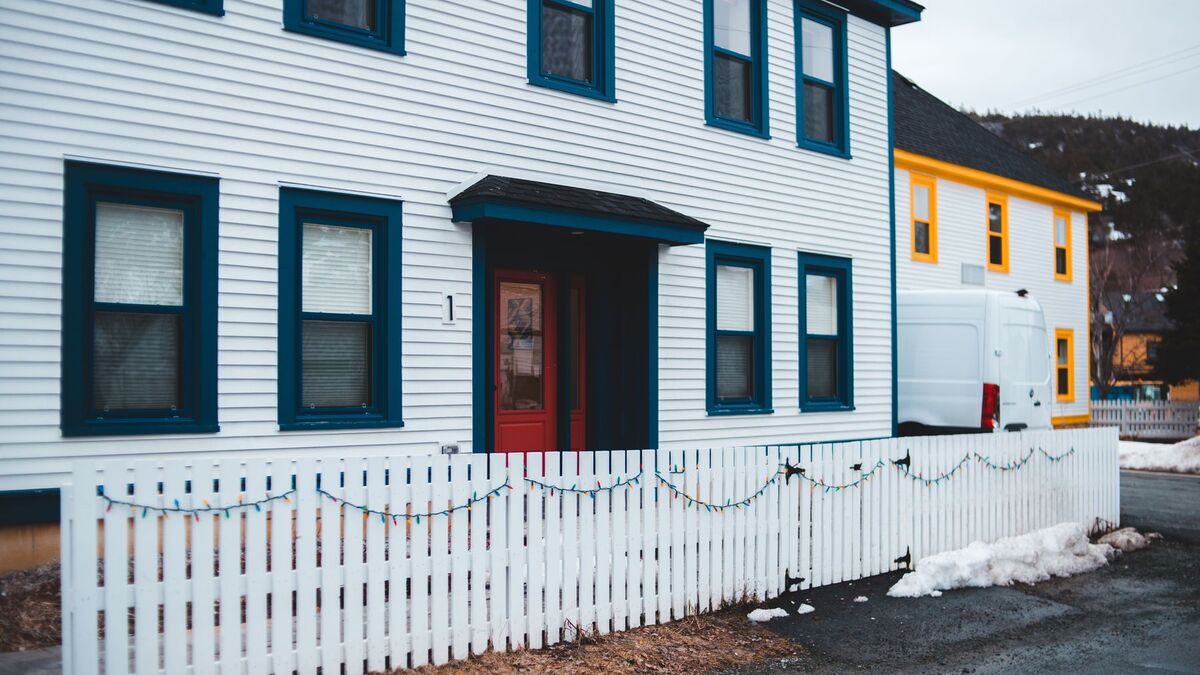
- Picket: classic front-yard fencing with pointed, flat or rounded picket tops, often along walks and gardens.
- Ranch rail and post-and-rail: two, three or four horizontal rails for larger lots and paddock-style borders.
- Colors beyond white, such as tan, clay, gray and textured woodgrain finishes, with the heat and fading cautions noted above.
Cleaning a vinyl fence without damaging it
Vinyl needs no paint, but it does get dirty. Mildew on the shaded side and road grime near the street are normal, and a yearly wash handles both.
- Start by hosing the panels down so the grit and loose soil wash away first, since scrubbing a dry, gritty surface leaves fine scratches.
- Wash with warm water and a mild dish soap, using a soft brush or a sponge. For mildew, a cleaner made for vinyl siding or fencing works well.
- Skip harsh abrasive pads, strong solvents and scouring powders. They dull the finish and can strip the protective surface layer.
- Power washing is acceptable if the pressure stays gentle and the nozzle spreads a broad spray; a tight, forceful stream aimed up close can etch or gouge the plastic.
- Rinse from the top down, and turn sprinkler heads that leave hard-water stains on the panels.
How repairable is vinyl fencing?
Vinyl is repaired by replacement rather than patching. Cracked or punctured parts are usually swapped out: a rail is unclipped and slid free, a board is lifted out of its channel, and a new piece goes in. That works best when the same manufacturer's profile is still available, so hang on to the proposal that names the manufacturer and the exact product line. Matching an older fence's color after years of sun exposure can also be tricky, so a new white rail may look brighter at first.
Post problems are a bigger job. A leaning vinyl post usually means the setting below ground has shifted, often because of frost heave in clay, and correcting it means digging. The broader repair process, including heaved posts and storm damage, is covered on the fence repair page.
Cost drivers and whether vinyl fits your property
The contractor prices vinyl after seeing the property. The big swings come from material grade and wall thickness, style, height, gates, color, reinforcement, old fence removal and how many cut sections the line needs.
Vinyl fits well in suburban yards with a long, regular line, pools and families who do not want to stain. If you prefer a natural look or a fence that can follow an awkward lot, compare the wood fence page, and for an open front-yard look on an older brick home, see ornamental steel. Suburban conditions are described on the Livonia and Troy pages. Pricing begins with a short note on the contact page listing where the property is, which panel style caught your eye, and a handful of yard pictures.
Vinyl fences in Detroit and the grades that survive a Michigan winter — common questions
Will a vinyl fence break in a Michigan cold snap?
It can. PVC grows more brittle as temperatures fall, so a sharp blow on a frigid day -- from thrown ice, a shovel or a plow ridge -- can crack a rail or post that would have shrugged off the same hit in summer. Fence-grade compounds with good impact modifiers and thicker walls resist this much better than bargain products. Keeping snow piles and snowblower discharge away from the fence line also helps a great deal across a Michigan winter.
Does vinyl outlast a wood fence?
Quality vinyl on properly set posts generally lasts longer than a wood fence of similar style, because it does not rot, does not need staining and is not eaten by insects. What ends a vinyl fence early is usually poor material or poor setting rather than age: thin walls that crack, rails that sag, and posts that heave in wet clay. With quality material and proper post setting, most owners only need to clean it and adjust the gate now and then.
Why is my vinyl fence sagging between posts?
Sagging in the middle of a section usually comes from a bottom rail that is carrying the weight of the boards without an aluminum stiffener inside it, and heat makes it worse. Thin rails and dark colors that absorb a lot of sun are the most common cases. Sometimes the cause is a post that has shifted and pulled the rail out of line. A reinforced replacement rail often fixes a sagging section without replacing the whole fence.
Is it a good idea to paint vinyl fencing?
Coatings made specifically for vinyl do exist, yet painting is rarely a smart move. Paint turns a no-maintenance fence into one that has to be repainted, and darker paint on a fence made for a light color can absorb enough heat to warp the panels. If you want a color other than white, it is better to choose a fence manufactured in that color, with UV protection built into the surface, than to coat a white one later.
What is the best way to clean green mold off a vinyl fence?
Hose it off first, then go over it with a soft brush dipped in soapy warm water. Green film on the shady side usually yields to a siding wash or a household product whose label says it is safe on plastic; rinse it all off afterward. A low-pressure washer with a wide tip speeds things up. Avoid abrasive pads and harsh solvents, which can dull the finish and remove the outer protective layer that keeps the vinyl from fading.
Is a vinyl fence a good choice around an in-ground pool?
Solid and semi-privacy vinyl is a popular pool fence choice in the Metro Detroit suburbs, because it does not splinter, rot or need finishing around wet decks. Any pool enclosure, however, has to meet the barrier rules adopted by the local building department, which deal with things like self-closing and self-latching gates, latch placement, openings and climbable surfaces. Those figures come from the adopted code, so the gate hardware and panel style should be confirmed with the city before ordering material.
Talk through your site
Start with the address, what you want done, and a few photographs of the area, including anywhere water sits after a heavy rain.
Related work
Fence Installation
New fences on city lots and suburban yards, set below Michigan frost, with permits and gates handled right.
Fence Repair
Heaved and leaning posts, broken rails, damaged chain link and gates that no longer latch.
Wood Fences
Treated pine and cedar privacy and picket fences, and what freeze-thaw does to wood.
Chain Link Fences
Galvanized and black-coated chain link for dogs, side yards, alleys and back lot lines.
Ornamental Steel Fences
Ornamental steel and iron-look fencing for front yards, older city homes and security.
Across the metro
Dearborn
Dense blocks of brick bungalows and colonials with narrow lots, alleys and front-yard rules.
Livonia
Ranch-house suburb on regular lots with aging fences, pools and back-to-back yards.
Royal Oak
Older walkable neighborhoods with tight lots, garages on alleys and style-conscious owners.
Troy
Larger suburban lots, newer subdivisions with association rules and in-ground pools.